
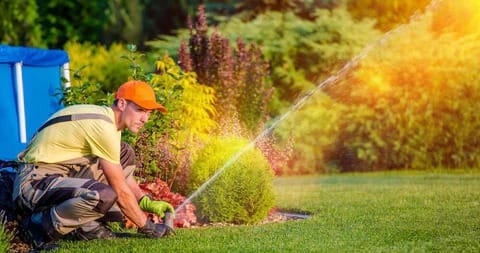
The Challenge of Water in the Desert
In the UAE, water is one of the most precious resources. With its arid climate, minimal rainfall, and soaring summer temperatures, maintaining green landscapes requires precision, technology, and sustainable water practices. Modern Irrigation systems UAE are designed not only to keep gardens and public spaces lush, but also to ensure every drop is used wisely. Whether for private villas, hotels, farms, or city parks, these systems balance beauty with environmental responsibility.
This combination of necessity and innovation has made irrigation technology one of the most important aspects of landscaping in the region.
1. Why Irrigation Systems Matter in the UAE
Without a reliable irrigation system, landscapes can suffer from:
Uneven Water Distribution leading to plant stress.
Overwatering that wastes resources and increases costs.
Underwatering that damages lawns, flowers, and trees.
Efficient systems ensure plants receive exactly the amount of water they need — no more, no less.
2. Types of Irrigation Systems in UAE
Choosing the right system depends on property size, plant variety, and water availability.
a) Drip Irrigation Systems
Deliver water directly to plant roots.
Minimize evaporation in hot climates.
Ideal for flower beds, shrubs, and vegetable gardens.
b) Sprinkler Systems
Evenly cover large lawn areas.
Can be stationary, rotating, or pop-up.
c) Micro-Spray Systems
Gentle watering for delicate plants.
Useful in ornamental gardens.
d) Centralized Irrigation Networks
Used for large-scale projects such as parks or commercial complexes.
Controlled from a single smart hub.
3. Smart Technology in Irrigation Systems
Modern irrigation systems integrate intelligent features:
Wi-Fi Controllers for remote scheduling.
Soil Moisture Sensors that water only when needed.
Weather-Based Adjustments to avoid unnecessary watering during rain or high humidity.
These innovations not only save water but also reduce operating costs by up to 40%.
4. Sustainable Water Management Practices
Sustainability is at the heart of UAE’s water strategy. Common eco-friendly approaches include:
Using Treated Greywater for irrigation.
Low-Flow Emitters to minimize waste.
Native Plant Landscaping to reduce irrigation needs.
Rainwater Harvesting Systems for supplementary use.
By combining these practices with advanced irrigation systems, properties contribute to the nation’s long-term environmental goals.
5. Installation Process – How It’s Done
A professional irrigation installation follows these steps:
Site Analysis: Assessing soil type, plant needs, and water sources.
System Design: Selecting the best irrigation method and layout.
Pipe & Sprinkler Placement: Ensuring even coverage.
Controller Programming: Automating watering schedules.
Testing & Fine-Tuning: Checking for leaks, blockages, and water pressure balance.
6. Maintenance – Keeping Systems Efficient
Routine maintenance keeps systems running at peak performance:
Seasonal Adjustments: Change schedules for summer and winter.
Filter Cleaning: Prevents clogging and uneven water flow.
Leak Detection: Saves water and prevents landscape damage.
At least twice a year — before the summer season and after.
Yes, solar-powered pumps and controllers are available for eco-friendly operation.
For small gardens and targeted watering, drip irrigation is more efficient. Sprinklers are ideal for lawns and large open spaces.
Conclusion
Modern irrigation systems in UAE are essential for preserving green landscapes while respecting water as a limited resource. Through smart design, advanced technology, and sustainable water management, homeowners and businesses can enjoy beautiful outdoor spaces without compromising the environment.
From private gardens to expansive public parks, the future of landscaping in the UAE lies in efficient water use and intelligent irrigation solutions.